
THE STATE OF HOUSING SUPPLY RESEARCH
In recent years, significant effort has been dedicated to promoting the idea that widespread housing affordability is achievable by constructing new market-rate units. While a growing body of academic research is often cited in support of this view, important questions remain regarding the methodologies, assumptions, and real-world applicability of the existing literature.
Complex financial, institutional, and market dynamics shape how and why housing is developed and, to my knowledge, housing researchers have yet to develop a theory or methodology to really explain these dynamics. The extent to which public policy, as opposed to broader economic conditions and market incentives, constrains housing supply is an area that requires further study. This field of research is still developing. Its findings, theories, and methodologies should be approached critically so that the discipline can improve.
MORE SUPPLY = LOWER PRICES?
As the field of housing supply research has emerged, a number of poorly conceived ideas and flawed public policy initiatives have also emerged. One such idea is that housing suppliers will supply enough new market-rate housing to lower prices of older homes to be affordable to low-income households. Proponents of the Yes In My Backyard (YIMBY) movement have pointed to the filtering theory of housing to support this idea.
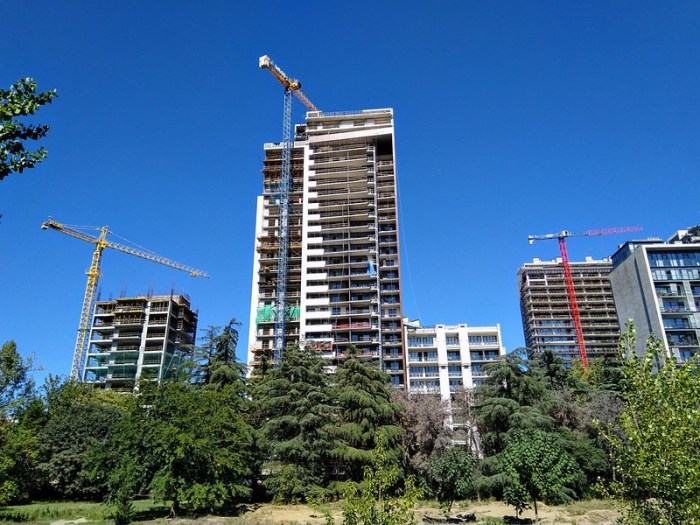
Recent housing research literature indicates that new market-rate housing helps to either slow rental increases or, in some cases, lower rents. This seems to align with the basic economic principles of supply and demand. If some new supply lowers rents a little, then surely lots of new supply will lower rents substantially, right? And there are things that advocacy groups can do to encourage lots of new housing supply, right?
To real estate professionals, slowing growth or declines in rent are often signals to stop building new housing. Rather than encouraging housing suppliers to continue producing new units, decreases in rental prices put a halt to new supply. Austin, TX is frequently cited as an example of a place where new housing supply led to rental decreases. It may be an example of that to housing advocates, but to housing developers Austin is perhaps better understood as an overly ambitious housing boomtown that has gone bust. For real estate investors, Austin’s example is something to avoid – not something to replicate. Chuck Marohn has written about this phenomenon. I wouldn’t be surprised if suppliers become more cautious about investing in the real estate market in places like Austin until such time that indicators, like rent growth, improve.
Professional real estate developers don’t provide housing because people need housing.
They provide housing only if and when there is good reason to believe that doing so will generate market-competitive returns for investors. To get built by professionals, housing has to be a good investment. Otherwise capital will instead go into a sector that is generating better returns. Declines in rents in a place is one indicator that a new housing development will have a difficult time generating good investment returns. Projects that don’t pencil out financially don’t get built. But surely there are public policy initiatives that can help more projects pencil out financially, right?
DEVELOPMENT DEREGULATION
Another idea that is popular among YIMBYs is that housing regulations can be eased to lower the costs of providing housing thereby making enough projects pencil out financially to result in widespread affordability. There must be reforms to State laws, building codes, zoning ordinances, and other development regulations that can lower development costs and help produce more supply, right? Another question worth asking is: has there ever been a time when the regulatory environment was sufficiently lax to enable housing providers to provide housing that was financially accessible to the vast majority of households? Yes (sort of). Up until about a century ago, there were very few development regulations and a wide variety of housing options were available at prices that even low-income households could afford.
In the 19th and early 20th century, to the extent that development regulations did exist, their impact on housing costs were modest. As a result, the vast majority of households were capable of buying or renting housing. Okay, so what’s to stop us from replicating the regulatory environment of 100+ years ago? While the lowest income households may have been able to afford their housing accommodations, those accommodations were very low quality. Structurally sound construction, private bathrooms, heating, hot water, and even indoor plumbing were often absent from housing for the lowest income households. While these housing conditions may have allowed for low prices, they also contributed to significant public health and safety challenges.

Making housing widely affordable today through the removal of development regulations would require allowing extremely low quality housing. Few people advocate for this position. It is neither politically feasible nor socially desirable. Yet many still believe that development regulations can be tweaked enough to make housing widely affordable without sacrificing quality standards. This is doubtful.
Does this mean that every regulation currently on the books is absolutely necessary and should never be tweaked or removed? Of course not. Reforming development regulations is important, but people should not be led to believe that enough regulations can be removed to produce widespread housing affordability without affecting basic safety.
Okay, so maybe regulations can’t be reformed enough to enable widespread housing affordability, but surely there are other initiatives that can encourage more projects to pencil out financially to generate enough new supply to substantially lower prices, right?
AFFORDABLE HOUSING SUBSIDIES
Many people are justifiably concerned that too many households struggle to afford to buy or rent desirable housing in the current market. Affordable housing advocates tend to believe that this problem can be solved with subsidies. They advocate for greater local, state, and federal funding for downpayment assistance, rental assistance, tax breaks, and gap financing for development. Many YIMBYs, however, have been critical of any attempt to encourage housing affordability that does not also include new supply of market-rate housing. In this instance, their criticism is justified.

Currently, many affordable housing units have years-long waitlists and programs like Housing Choice Vouchers (HCV) and Low-Income Housing Tax Credits (LIHTC), help only a fraction of households who qualify for them. Significantly increasing funding for these programs is not feasible. Fully funding HCVs would cost billions every year. There isn’t political support for this. But even if advocates were successful at garnering more support for increased funding for these programs, there are other challenges as well.
An unintended consequence of the HCV program may be to decrease homeownership rates in low-income neighborhoods by making low-income rentals profitable for absentee landlords. GIS mapping projects have helped reveal the extent of absentee ownership of housing in low-income neighborhoods in cities like Detroit and Baltimore.
As for LIHTC, one 2018 study found that housing units built under this program cost an average of $165,000 more per unit to develop than comparable market-rate housing and this effect was higher in New England than in the rest of the country.
Affordable housing subsidy programs like these may never be able to get beyond a lottery-like system where only a portion of qualifying households actually receive assistance. While there are certainly some benefits to these programs, YIMBYs are right to doubt that housing subsidies alone are a scalable solution to affordability challenges. Okay, but what if subsidies are used in conjunction with strategic reform of development regulations? Without sacrificing safety and public health, could some deregulation help to lower housing costs enough that fully funding affordable housing programs becomes politically- and financially-feasible?
VALUE CAPITALIZATION IN REAL ESTATE
Many of our public policy approaches to housing are contradictory. Some policies seek to maintain high housing prices so that property owners can get a good return on their investment. Things like lower interest rates and longer terms for loans are aimed at helping people to borrow more so that they can pay more for housing. In the 1930s, the federal government helped stabilize a volatile housing market by encouraging short-term loans with balloon payments to be refinanced into 15-year fixed-rate mortgage-backed home loans. Since that time, 20-, 25-, and 30-year mortgages have become available, and, as Chuck predicted, a 50-year mortgage was being considered. This is all to help maintain high housing prices.
At the same time, lower housing prices are seen as necessary in order for more people to be able to afford to buy and rent homes. But do efforts to lower development costs translate into lower prices? Let’s look at an example.
Many cities have some version of a Tax Assessment Deferral Program aimed at encouraging development by helping projects to pencil out. Under the program, when a property is significantly improved and its taxable value increases, the local property tax on that increased value is phased-in over several years. These tax savings have a value. Developers can capitalize the value of the tax assessment deferral when they refinance their loan or sell their asset. The City of New Haven, CT actually revised the terms of its Tax Assessment Deferral Program in 2019, in part, in an attempt to address this very problem.
The point is that real estate professionals are often aware of the various programs, incentives, and policies that affect the value of property. The availability of the home mortgage interest deduction, tax assessment deferrals, tax abatements, zoning allowances, tax credits, downpayment assistance, and so on can be factored into a buyer’s purchasing power and a seller’s property value. Within the existing framework of the real estate market, translating development cost savings into lower housing prices is not as straightforward as many advocates think.
Cost savings, just like revenue increases, can be capitalized into higher valuations of land and assets.
As is the case with most businesses, suppliers in the housing industry generally set prices based on market conditions and what buyers or tenants are willing to pay, rather than on production costs. This presents a significant challenge to the YIMBY worldview. And that is without even accounting for the negative financial impact that tax abatements or selling City-owned land at a discount can have on the budgets of municipalities and their taxpayers.
THE CART BEFORE THE HORSE: MISSING HOUSING SUPPLIES AND SUPPLIERS
Are efforts to increase the supply of market-rate housing, reduce development regulations, increase affordable housing subsidies, and provide incentives for professionals to provide more housing a complete waste of time? No. Will these efforts result in widespread housing affordability? Also, no. These efforts can be worthwhile, but they also need to be understood in a broader context. I am not optimistic that focusing on the production of housing units within the current housing supply paradigm will ever fully scale to meet demand. Two interrelated characteristics of this current paradigm are a big reason why.
Firstly, there is an over-representation of larger-scale and absentee housing suppliers who view people as products and whose real estate assets export most of their economic benefits to out-of-town owners, investors, builders, and managers. A second characteristic of the current paradigm is an under-representation of smaller-scale and locally-based housing suppliers. The current housing supply paradigm may be able to provide some of the missing supplies of housing. But no amount of tinkering with development regulations, subsidy programs, or incentives will enable the current paradigm to produce all missing supplies of housing.

It is only in recent decades that larger-scale and absentee housing suppliers have come to be over-represented. Most of the housing in beloved historic neighborhoods was originally supplied by smaller-scale and locally-based suppliers. These suppliers are largely missing today. Not only do they need to be found again – they first need to be remembered. They may be the only ones capable of providing the missing supplies of housing that can ultimately address affordability.
CONCLUSION
If housing advocacy is a football field and widespread affordability is the goal, then conventional approaches have been stuck at around the 30 yard line for several decades. These approaches, with their focus on advocating for increased funding for low-income housing programs, have failed to make meaningful advances. Recently, the idea that progress can be made on affordability by increasing the supply of new market rate housing has grown in popularity. While this strategy may yield some modest gains, I am doubtful of its ability to get over the goal line. Fully achieving housing affordability will require a creative combination of multiple strategies, including greater involvement from the house hackers, incremental developers, small-scale builders, and other housing suppliers frequently venerated by Strong Towns.

Whether through direct action or partnerships, remembering and finding the smaller and more local housing suppliers needs to be a priority for any organization that is serious about addressing the issue of housing affordability. The Strong Towns movement, through its media publications and Local Conversations groups, seems to be one of the few organizations with a handle on what America’s housing challenges are and how those challenges can be addressed at scale.


